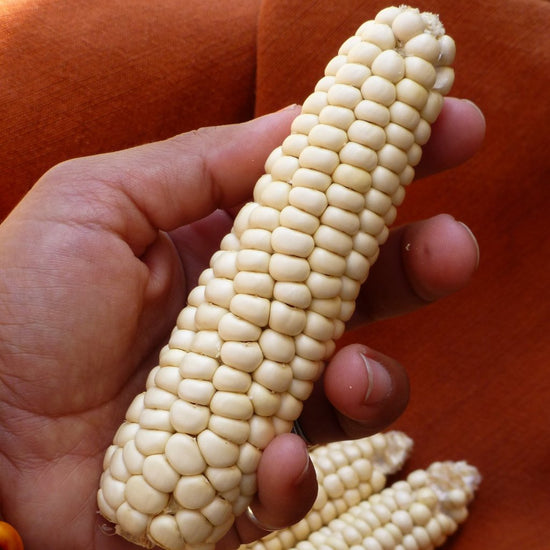
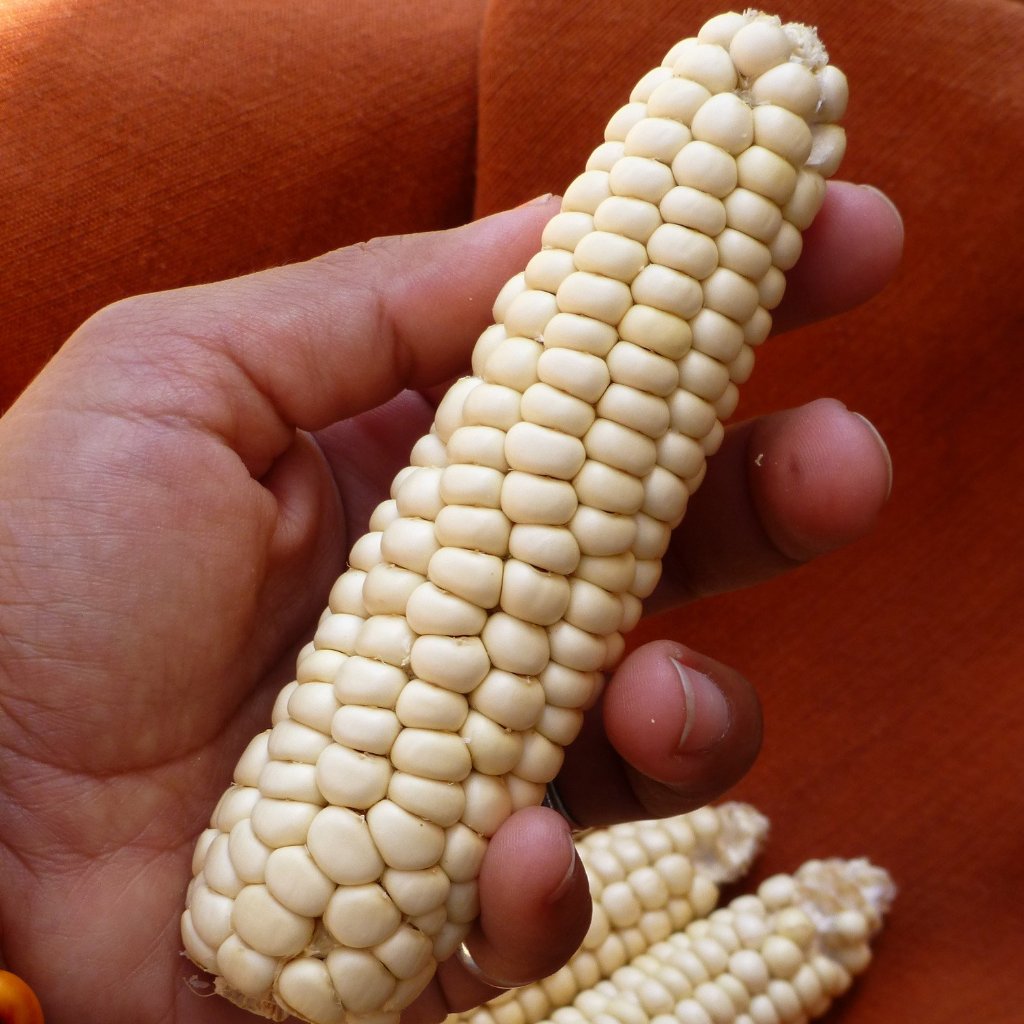
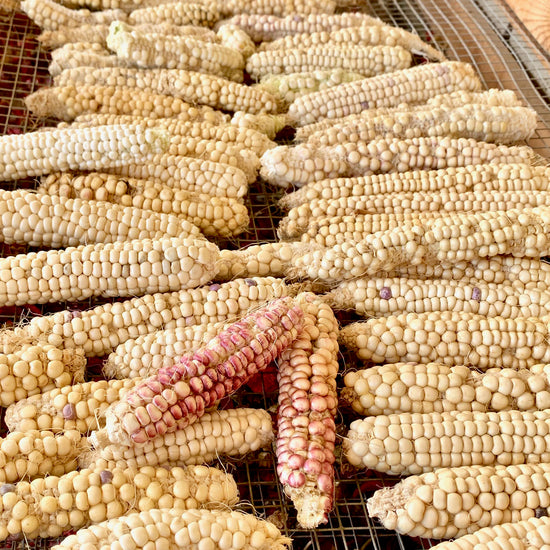
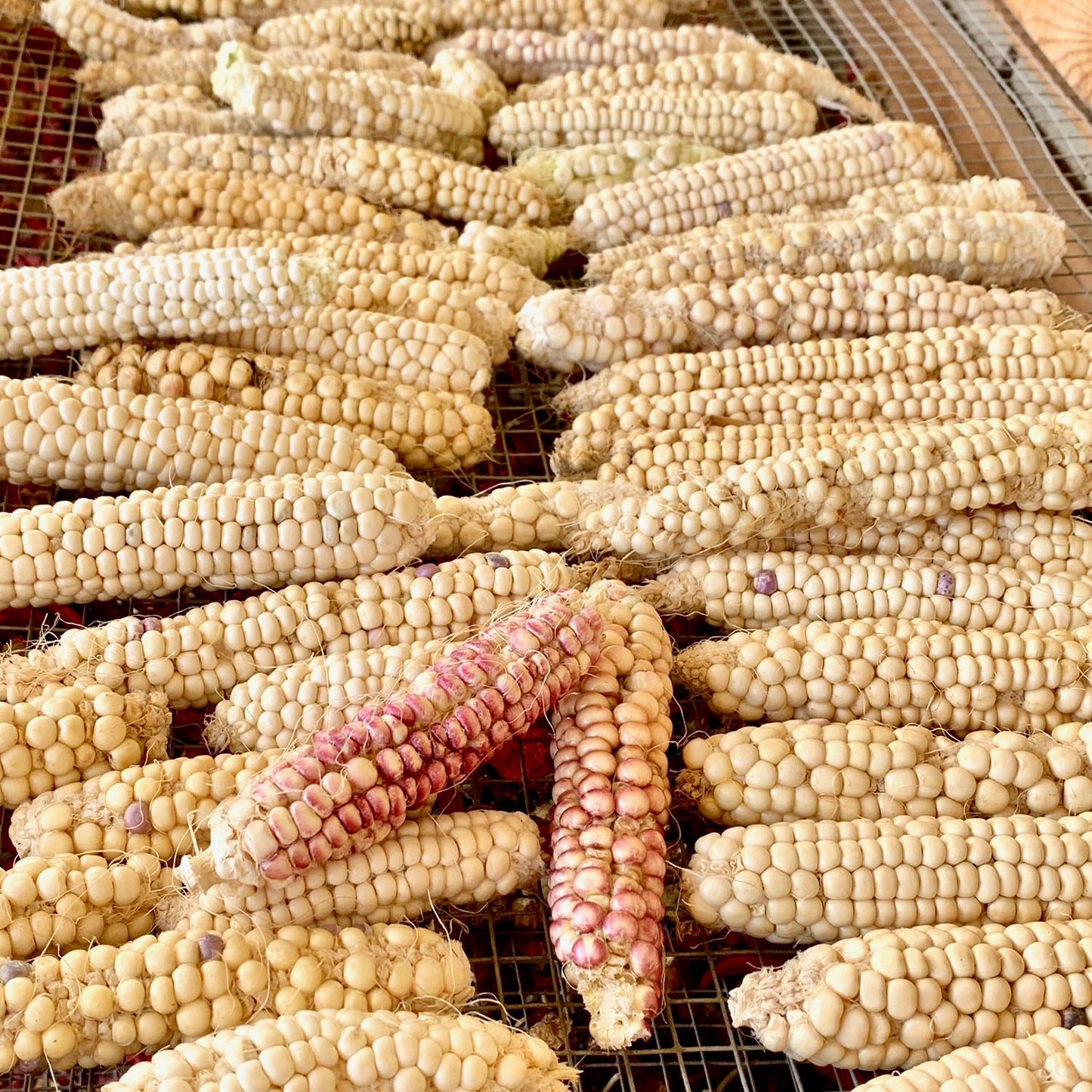
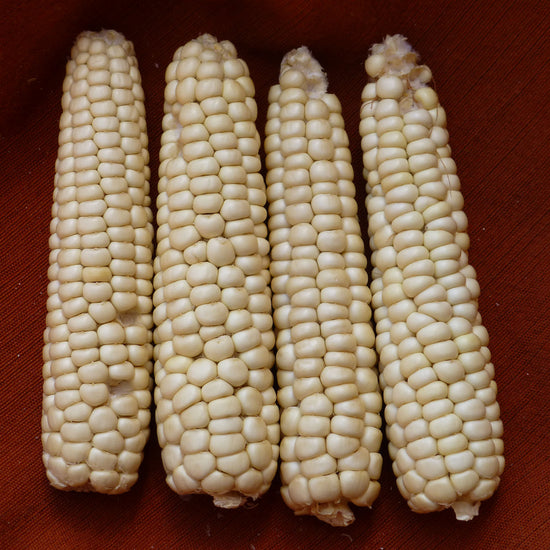
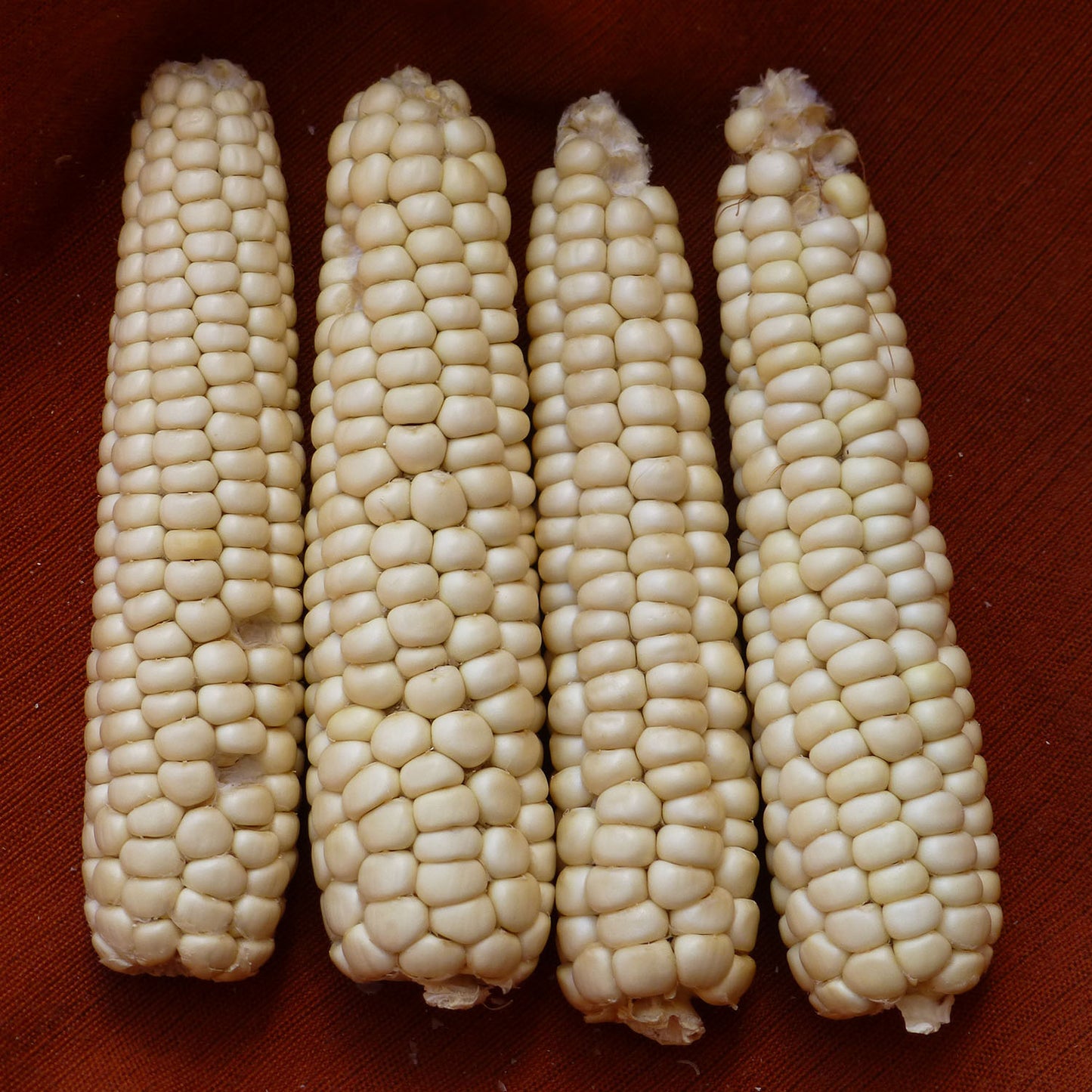
Smoik Hu:n. Papago (O'Odham) Tohono (Desert) corn.
The germination was great. The corn grew well in northern Montana, not far from the Canadian border. The opposite end of the nation from it's homeland. The 60-day label means that it is at the milk stage 60 days after planting. It takes a lot more days on the plants to become dry grain.
We grow 12 acres of corn that we created from Native genetics from our dryland northern sage country. (You may know me for creating Painted Mountain Corn.) Lewis and Clark called our region the "North American Desert". Recently we have been slammed by drought and escalating heat. All over the world farmers are quitting because the global climate is turning too hot and dry. So, I am beginning to create another line of corn to feed people. This one based on Papago genetics. Drought hardy genetics. I'm thinking about calling it, "Climate Collapse Hero"! I am going to make it blue so that people can benefit from the healing antioxidants in the blue pigment. I just ordered some more of this corn, and I'm hoping there is a blue kernel or two in this batch.
This Papago corn matured in our shorter growing season. We grow corn dryland with no irrigation and very little rain. This Papago probably got a little more moisture than it gets in Arizona, but not much. It did well here.
In our location the plants grew taller, 5-6' tall, partly due to the change in day length from its homeland. Some stalks were stronger than others. A few plants had no suckers (secondary stalks), and some had several. All the suckers have male tassels on the tops. (Many lines of corn have cobs or hermaphrodites on the tops of the suckers.) Having more pollen tassels is important because when it gets over 100 F, the heat can kill pollen, and tassels on modern corn, at least, get tassel burn and get fried. Having extra tassels on the plant assures there will always be pollen.
The cobs were good sized. 3/4 of the cobs had a male spike (a tassel) sticking out the end of the cob. This was bad because it lets mold get in under the husks and some cobs rotted. I do not know if something about our environment triggered this primitive defect? But, it should be selected against.
I spent 3 days on CHAT GPT (AI) investigating all the corns called "Papago" and investigating NS/S deep records on this accession. If you are looking for a truly draught hardy corn I could only find two that haven't gone extinct, and this is one. The other accession is on GRIN, the national seed bank, and it was donated to them from NS/S.
If you want drought hardy corn, here is what you need to know: There are four reservations for the Papago/Pima people. Three of them have about 3 more inches of rainfall, and they are on rivers. Corns on the Pima reservation to the north have been irrigated from the Gila River for thousands of years. Corn from here is heat tolerant, but they have not been stressed for lack of water. They all get called "Papago" corn. But, if you care about drought tolerance, you want accessions from the southern desert (Tohono) reservation where there is no irrigation. Experts know these to be the most drought hardy corns in the world. As I said, I only found two accessions left in existence, and this is one of them. So, anyone preparing for climate collapse, and empty water wells, this is your "home boy"!
CHAT's deep digging into NS/S archives told me that this accession is not a single strain. It is a composite of 9 Papago desert corns all from 20-40 miles from the Mexican border. That is great news for a breeder, because this accession contains a healthy representation of the genetics from this very rare region. If I got wrong information, I hope someone will tell me. But, I think it's true, and "hurray" for whoever put this together! This is a genetic gold mine!
The most terrible problem is that this, and another line I got from NS/S, had SMUT (fungus). We had never seen smut before. We had a clean farm. The spores came on the seeds. The smut growths burst-open and spread spores far and wide in the winds. They stay viable for years. Now we will have to fight with rotten cobs the rest of our lives. I recommend that you soak your seeds in rubbing alcohol for a few minutes before planting, or it might destroy your farm. NS/S should have warned us that their seed was exposed to smut and that it was our job to sterilize it. I wrote them and did not get an answer back to me.
I am very grateful to NS/S for preserving and sharing these near-extinct genetics. I have used some of their genetics in creating stress hardy lines of nutritious corn which are feeding people suffering from climate change, and saving lives around the world!
The world is heating up and it is predicted that 3/4 of the world will dry up, turning more like deserts. NS/S is the place for the world to turn to for a grain food staple for our hotter, dryer future. I hope peo...